
Output That Keeps Sliding
When monitoring shows string voltage falling year over year, aging modules are usually the cause. Degraded cells and corroded busbars cannot recover, so a module swap is the practical fix for homes around Lodi.
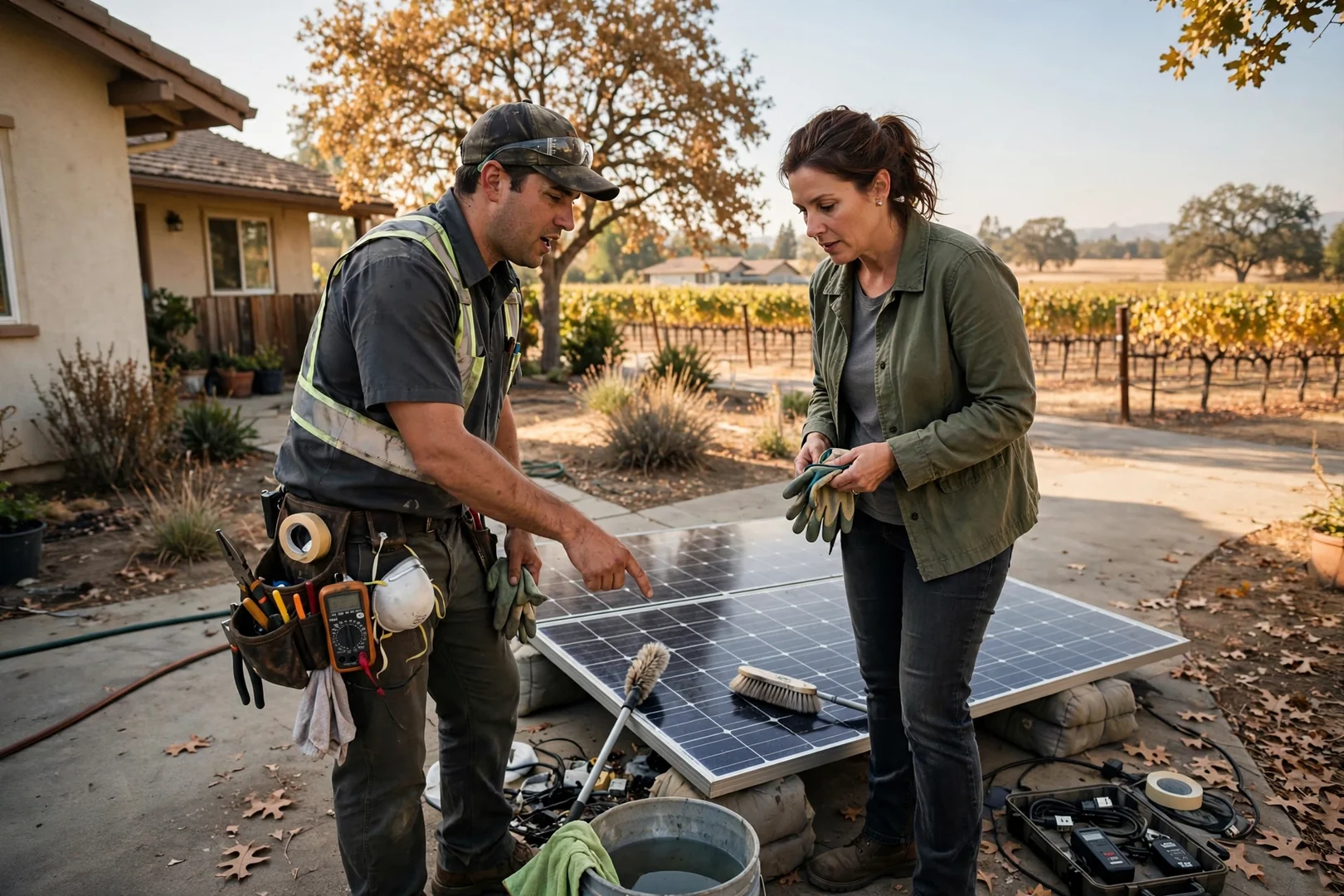
Solar panel replacement means removing aging or damaged modules and installing new ones on your existing racking, then re-terminating the DC wiring and confirming string voltage so the array performs the way it should. Homeowners around Lodi often reach this point after a decade or more of valley sun, summer heat soak, and winter tule fog cycling that leads to delamination, hot spots, or cracked backsheets. Older rooftop arrays on ranch-style homes and newer two-story neighborhoods both show it. Our crew at Lodi Solar Panel Installation Pros handles panel swaps, mismatched module upgrades, and flashing repairs at the mount points, with 2026 scheduling open through the dry spring and early fall windows when roof work goes smoothest.
Call Us On: 209-340-0835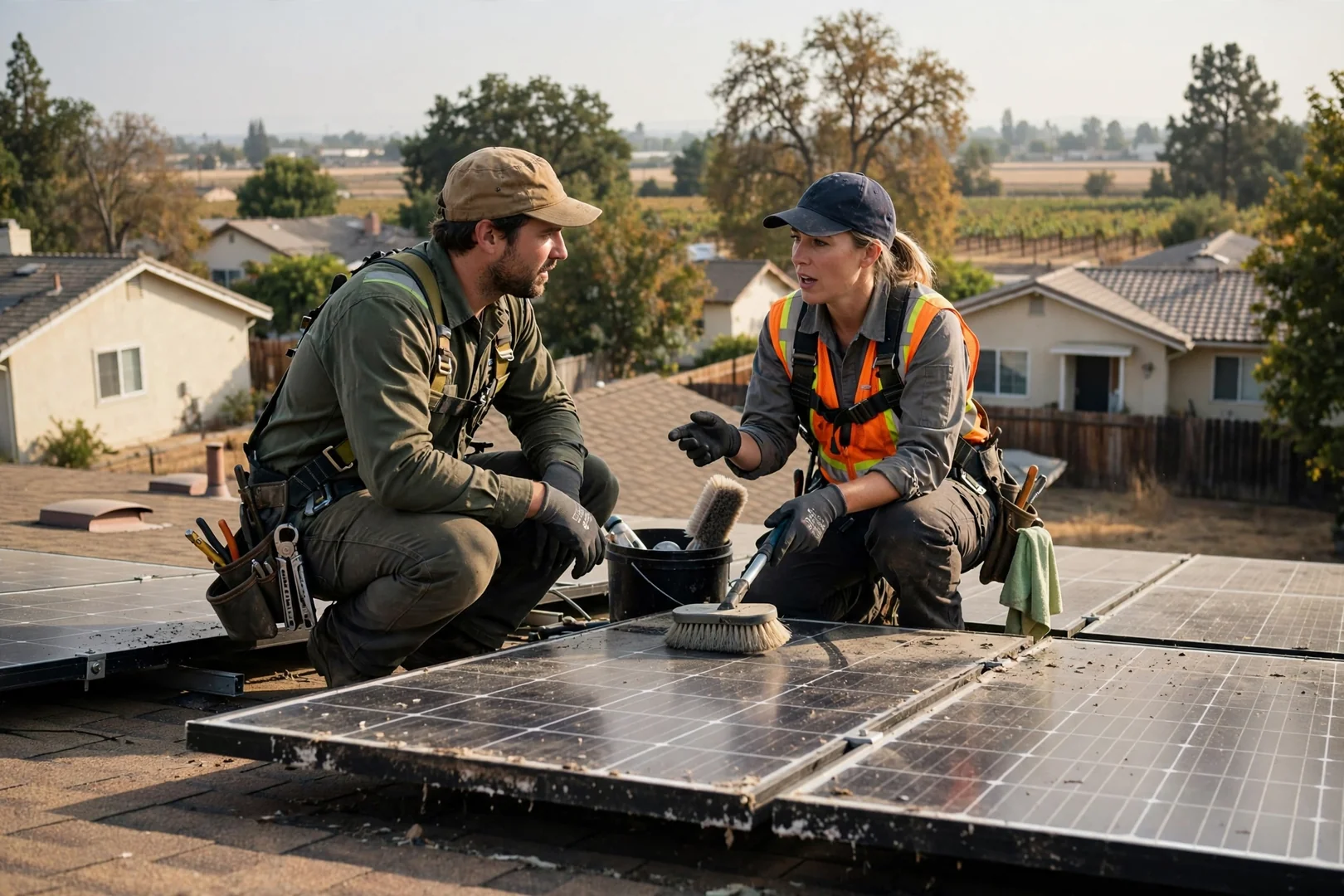
Reliable Panel Replacement in Lodi
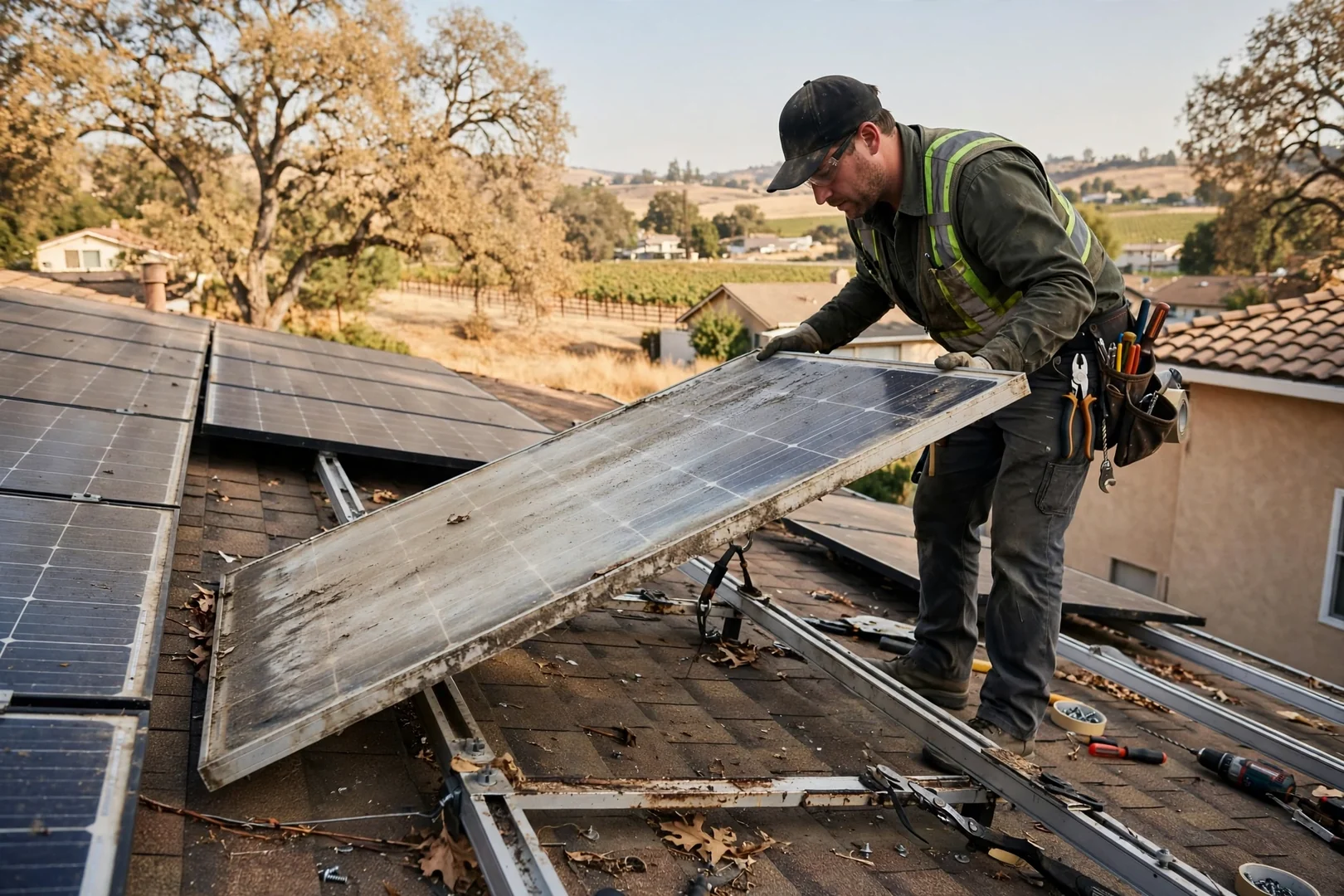
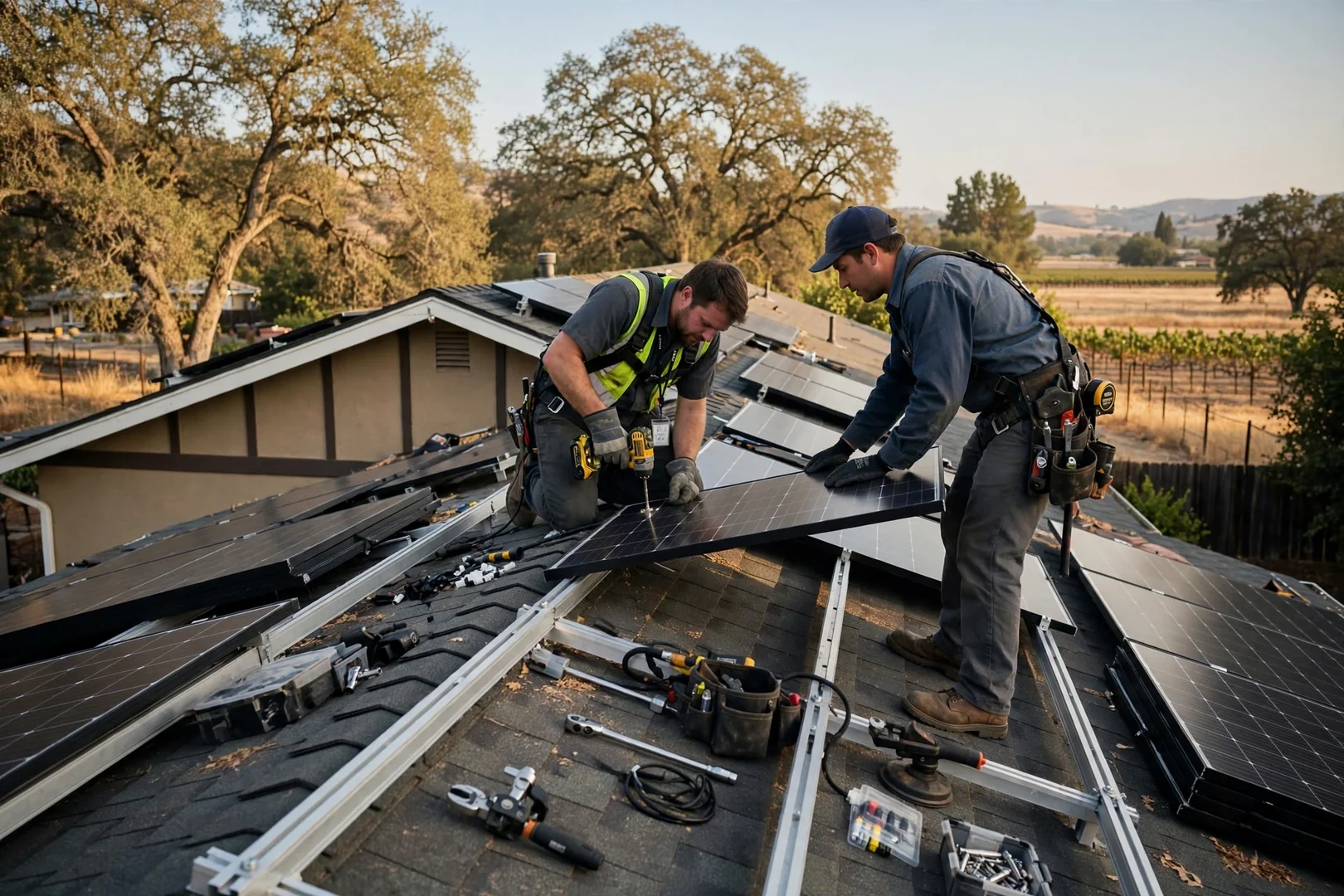
Solar panel replacement is the process of removing underperforming or failed photovoltaic modules and installing compatible new ones on the existing mounting system, and at Lodi Solar Panel Installation Pros it includes production testing, module matching, roof penetration resealing, and inverter compatibility checks across Lodi properties. Work starts with an inspection where we read string voltage and amperage at the combiner or inverter, check for microcracks and browning in the cells, and compare current output against the original design. From there we lift the affected modules, inspect the rails and L-feet, replace worn flashing or lag seals, and set new panels with torque-checked hardware before re-terminating the MC4 connectors. Grape-country dust, heavy pollen in spring, and long stretches of triple-digit summer heat all speed up cell degradation here, so we look at the whole array rather than one bad panel. Homes, warehouses near the vineyards, and multi-unit buildings each get a slightly different approach based on roof pitch, membrane type, and access. Every job ends with a post-job walkthrough. Our 2026 replacements also account for updated module sizing, since newer panels rarely match the footprint of the ones installed years ago.
Call Us On: 209-340-0835Panel Replacement Cost Factors
Solar panel replacement pricing in Lodi depends primarily on module count and wattage, roof pitch and access, whether the existing racking can be reused, and any inverter or wiring changes the new panels require. Panel wattage matters because a modern module often produces more than the one it replaces, which can shift string sizing and require an inverter review. Racking condition is the next factor. If rails, L-feet, or flashing have corroded under years of sun and fog moisture, resealing those penetrations becomes part of the scope.
Labor also tracks with height and layout, so a single-story ranch off a quiet residential street costs less to work on than a steep two-story roof or a commercial low-slope membrane needing extra fall protection. Partial replacements where only a few modules failed price differently than a full array swap, and mismatched module output sometimes makes the full swap the better long-term value. Removal and recycling of the old panels, permit fees, and utility interconnection paperwork round out most 2026 quotes.
Because no two arrays age the same way in this climate, exact numbers come after a site assessment where we test output, inspect mounts, and confirm what your inverter supports. We provide free written estimates that list parts, labor, and disposal separately, so you can see where every dollar goes before anything is scheduled.
CALL US AT 209-340-0835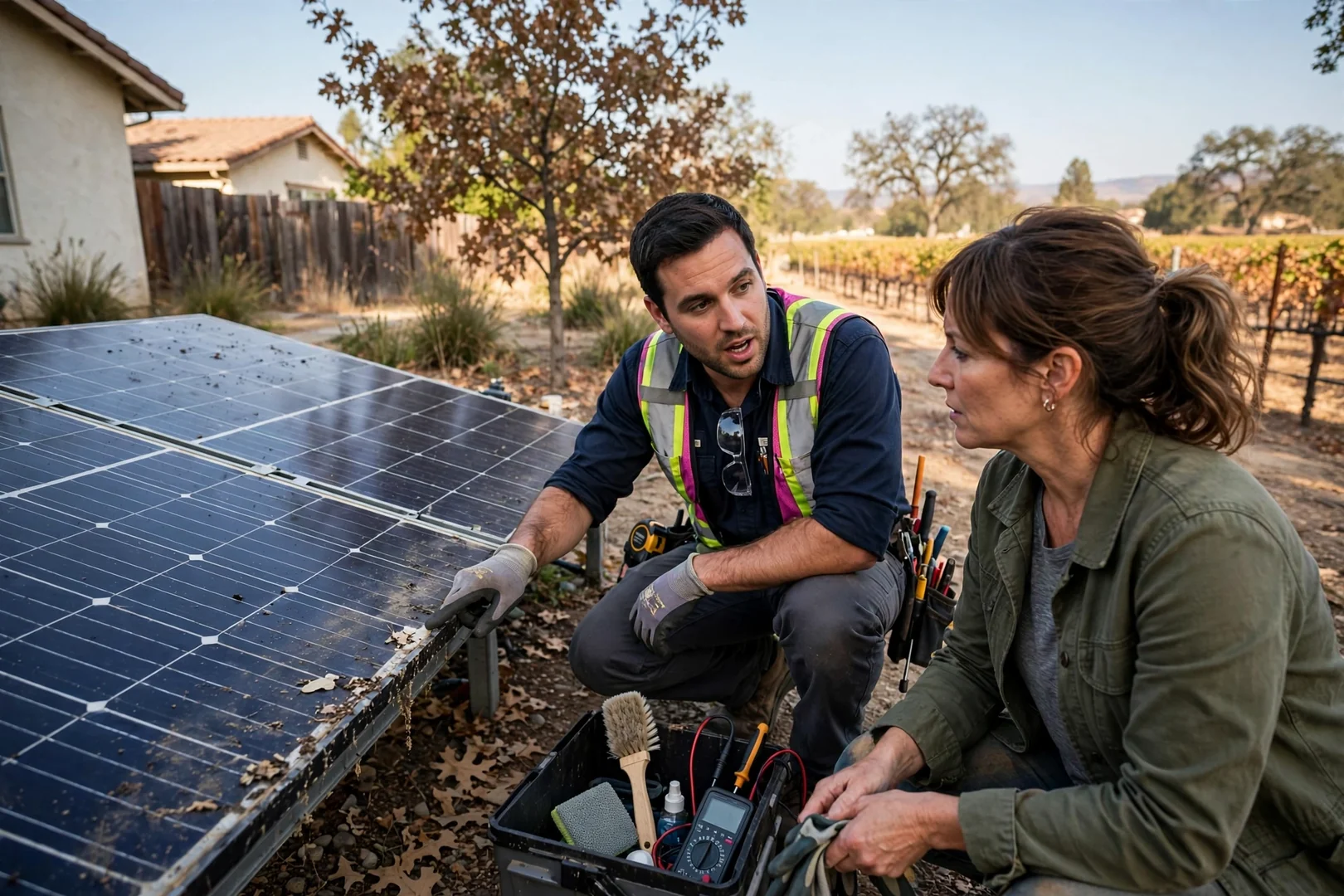
- Signs You Need Panel Replacement -
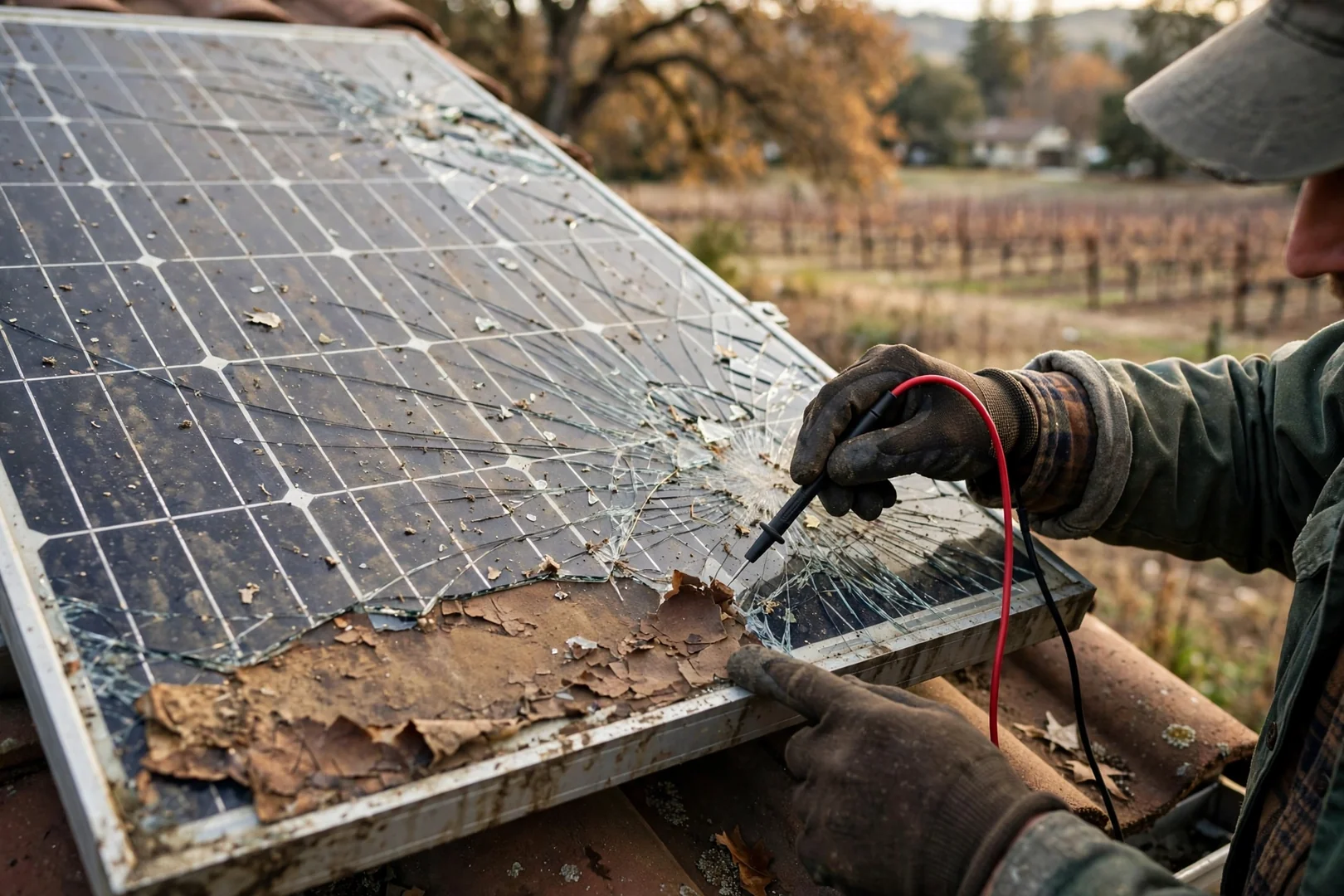
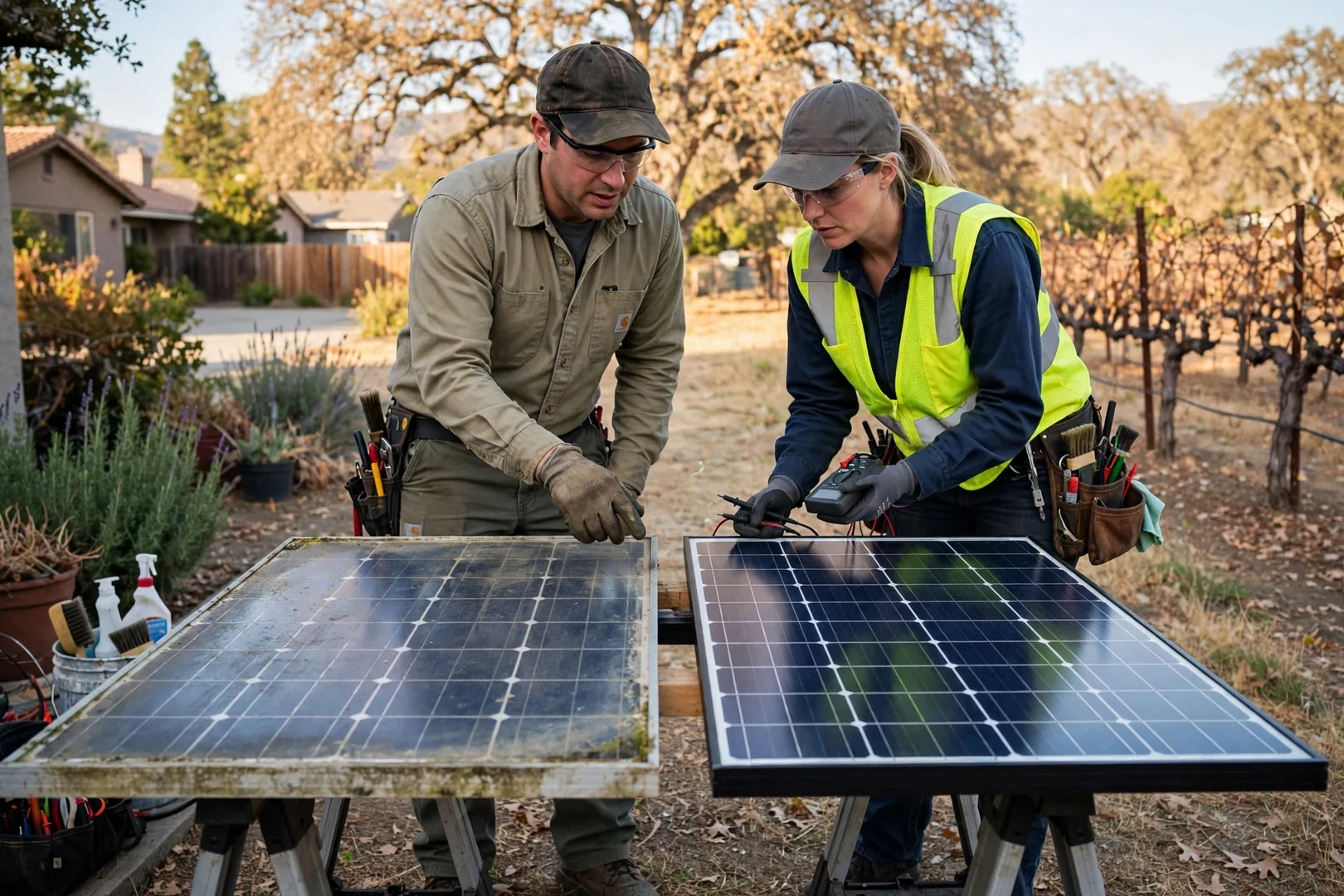
Panels need replacement when output drops sharply, cells delaminate, or backsheets crack from years of Central Valley heat. Lodi homeowners often notice browning EVA layers, hot-spot burn marks, and inverter fault codes. Hairline microcracks spread each summer. Delta fog adds moisture ingress. A 2026 replacement restores full output.
Click Me to Call: 209-340-0835When monitoring shows string voltage falling year over year, aging modules are usually the cause. Degraded cells and corroded busbars cannot recover, so a module swap is the practical fix for homes around Lodi.
Long valley summers, spring hail, and winter tule fog stress laminates and junction boxes. Cracked glass, bubbled backsheets, and burnt bypass diodes show up on roofs and ground arrays across nearby neighborhoods.
Recurring ground faults, arc-fault trips, or a single underperforming string signal that patchwork repairs have run their course. Replacing the affected modules and refreshing connectors ends the cycle of service calls.
How We Handle Replacements
Each Solar Panel Replacement follows a four-step sequence: inspection, written estimate, module changeout, and a verified post-job walkthrough. Work begins with an on-site check of racking, flashing, wiring, and inverter logs so we know which modules truly need to come off. We match new panel wattage and voltage to the existing string design, or rework the layout when older modules are no longer produced. Lodi roofs vary from tile ranch homes to metal shop buildings, so mounting hardware and penetration sealing are chosen for the surface in front of us. Every 2026 replacement closes with production testing, torque checks, and photos shared with the homeowner. Nothing gets buttoned up without verification.
Schedule Your Inspection
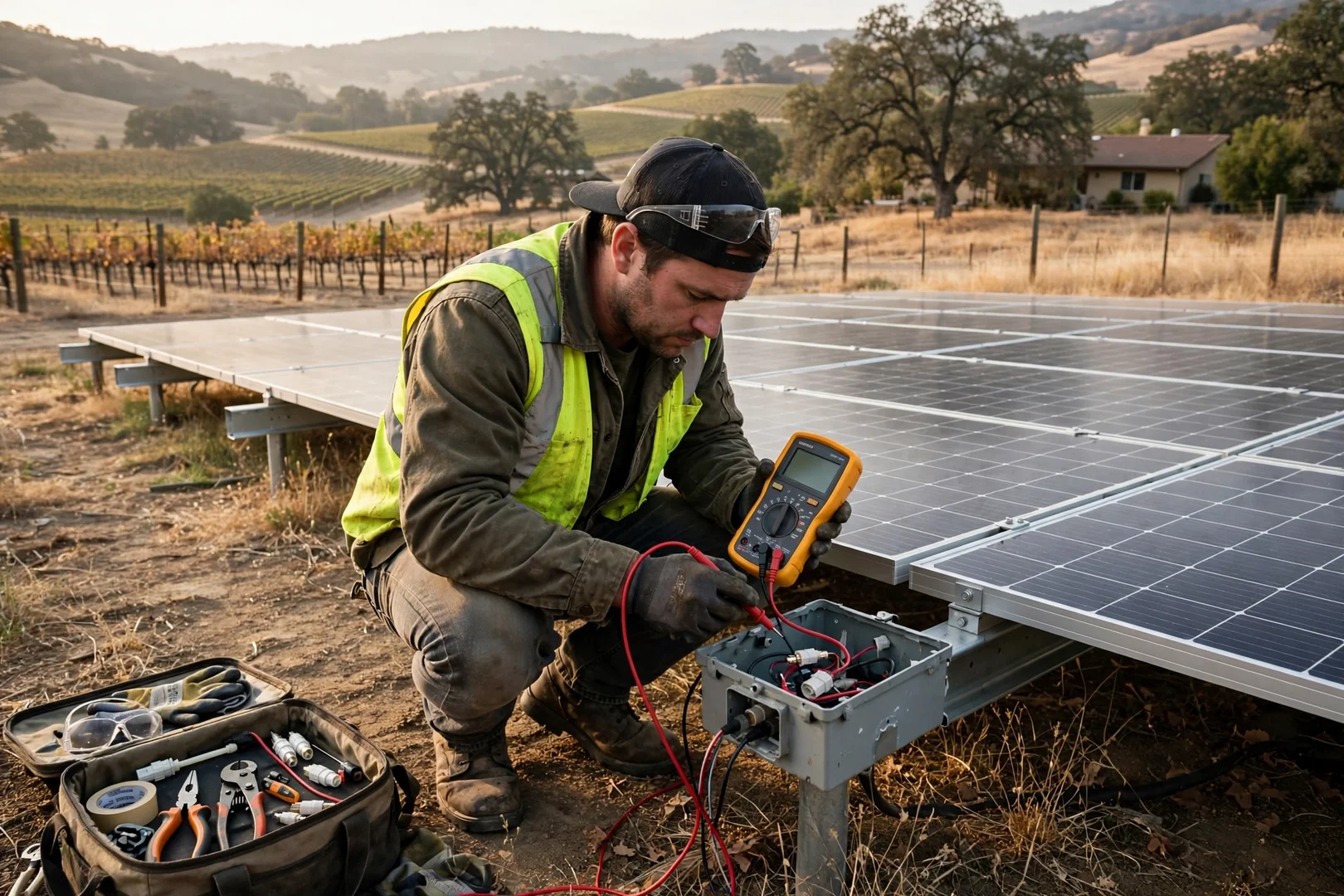
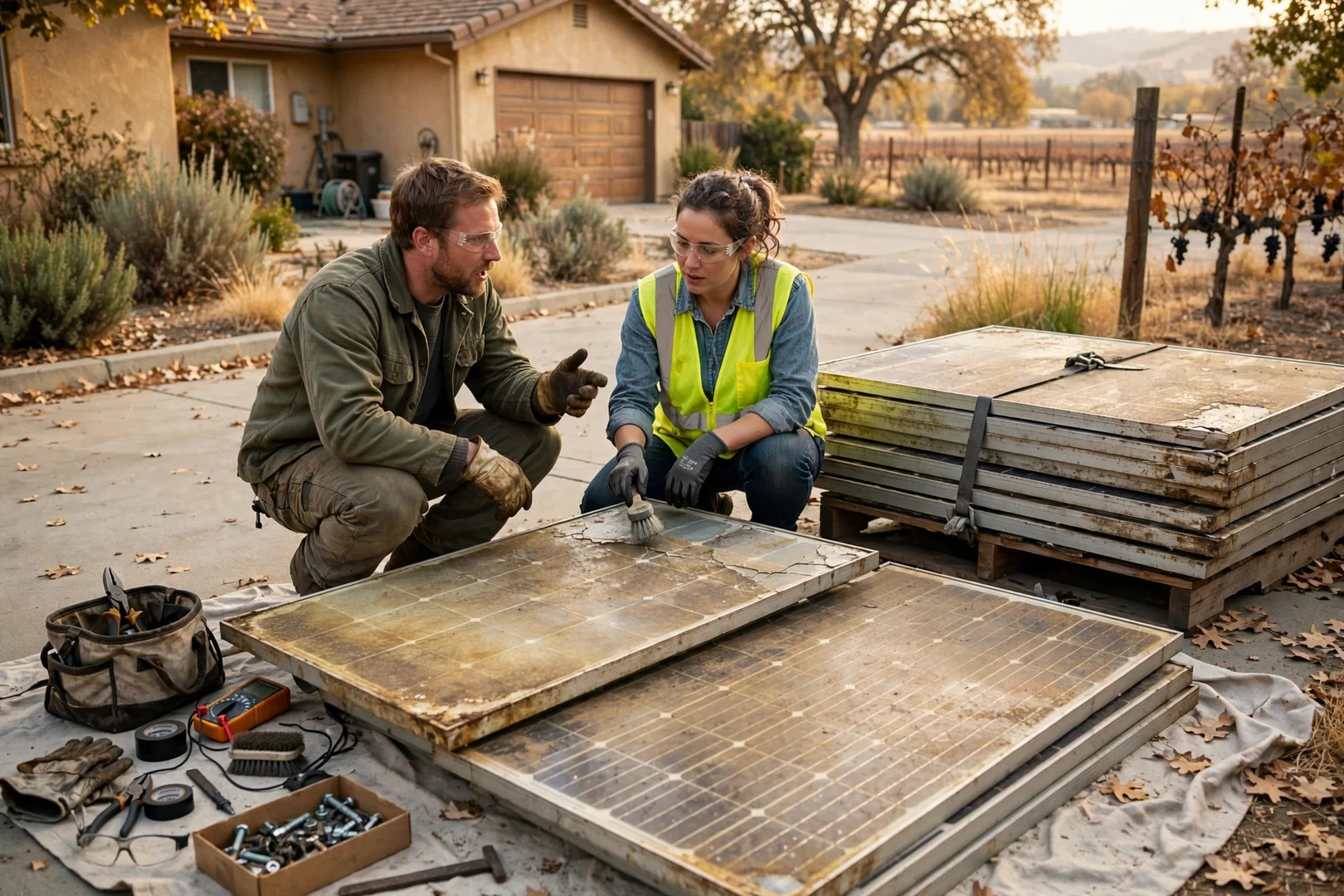
We walk the roof or ground mount, read inverter and monitoring data, and test string voltage to identify failed modules, chafed conductors, and worn racking clamps before quoting anything.

You receive a written estimate listing panel wattage, quantity, mounting hardware, and labor. When original modules are discontinued, we confirm electrically compatible replacements that keep the string within inverter limits.

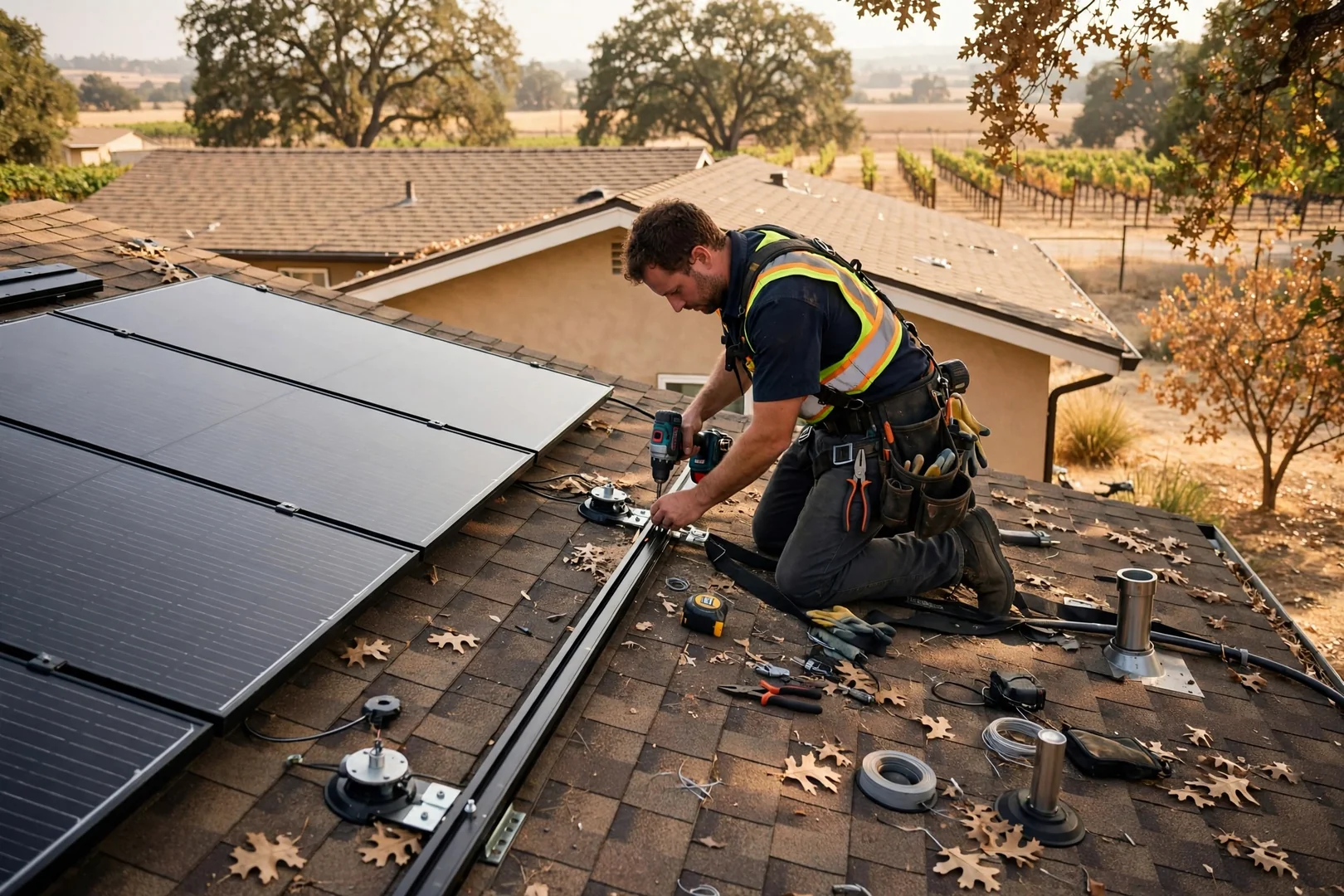
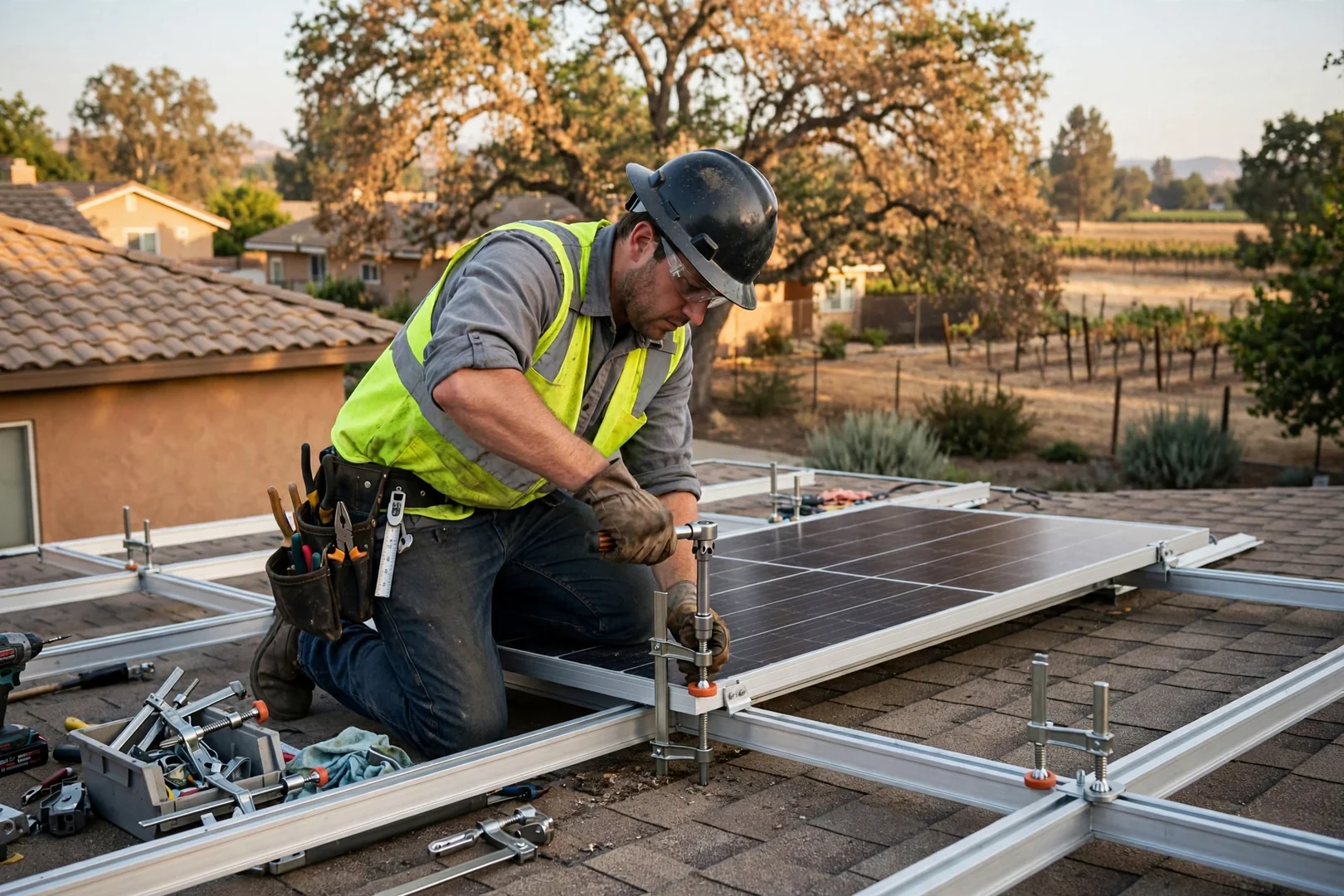
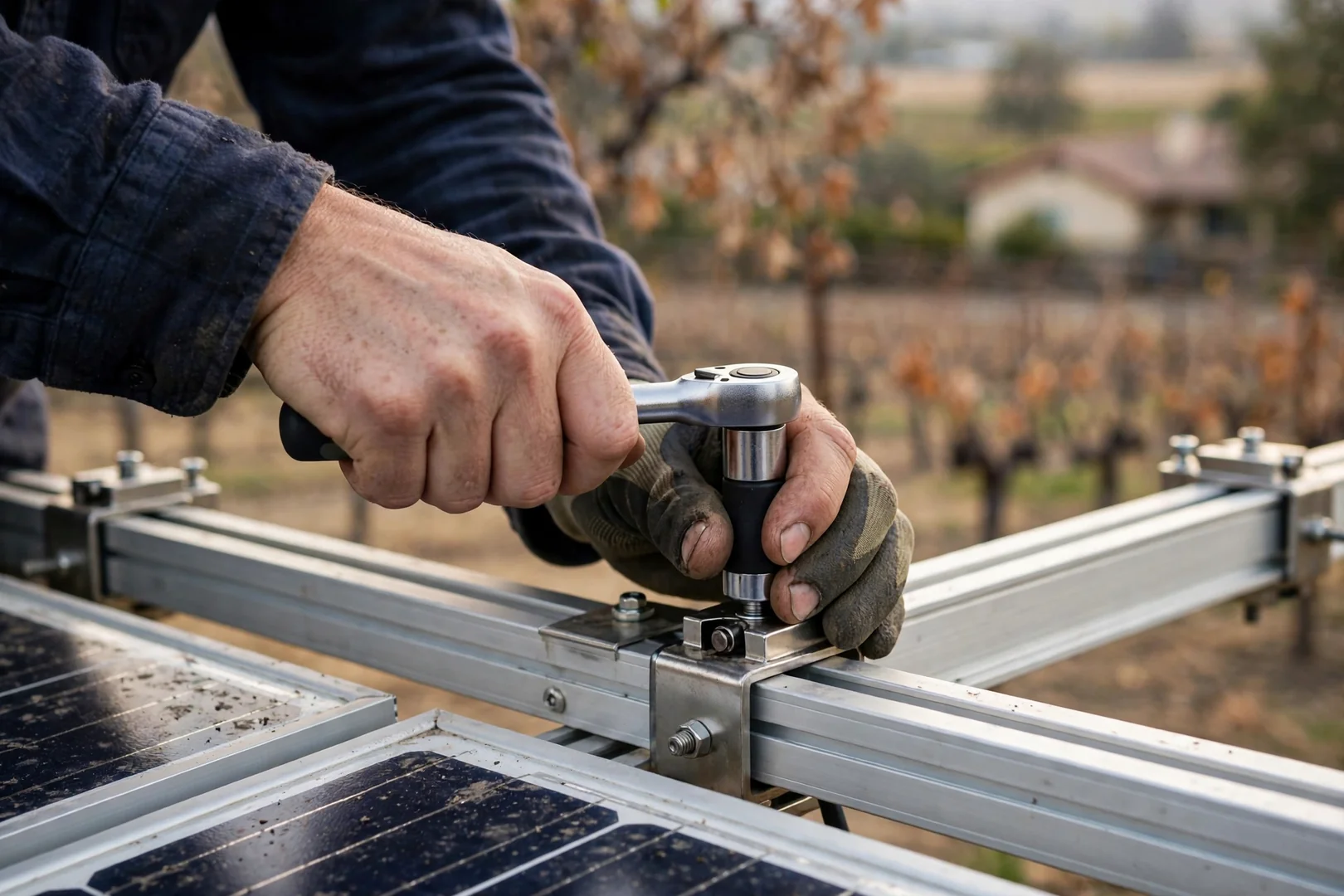
System DC is isolated, panels are lifted off in sequence, and roof penetrations are inspected and resealed. New modules are torqued to spec, grounded, and secured with rail hardware suited to local wind and heat cycling.

We verify open-circuit voltage, confirm production on the monitoring portal, clear old fault codes, and finish with a walkthrough so you see the new layout, cleaned worksite, and documented results.
Recent Panel Replacement Jobs
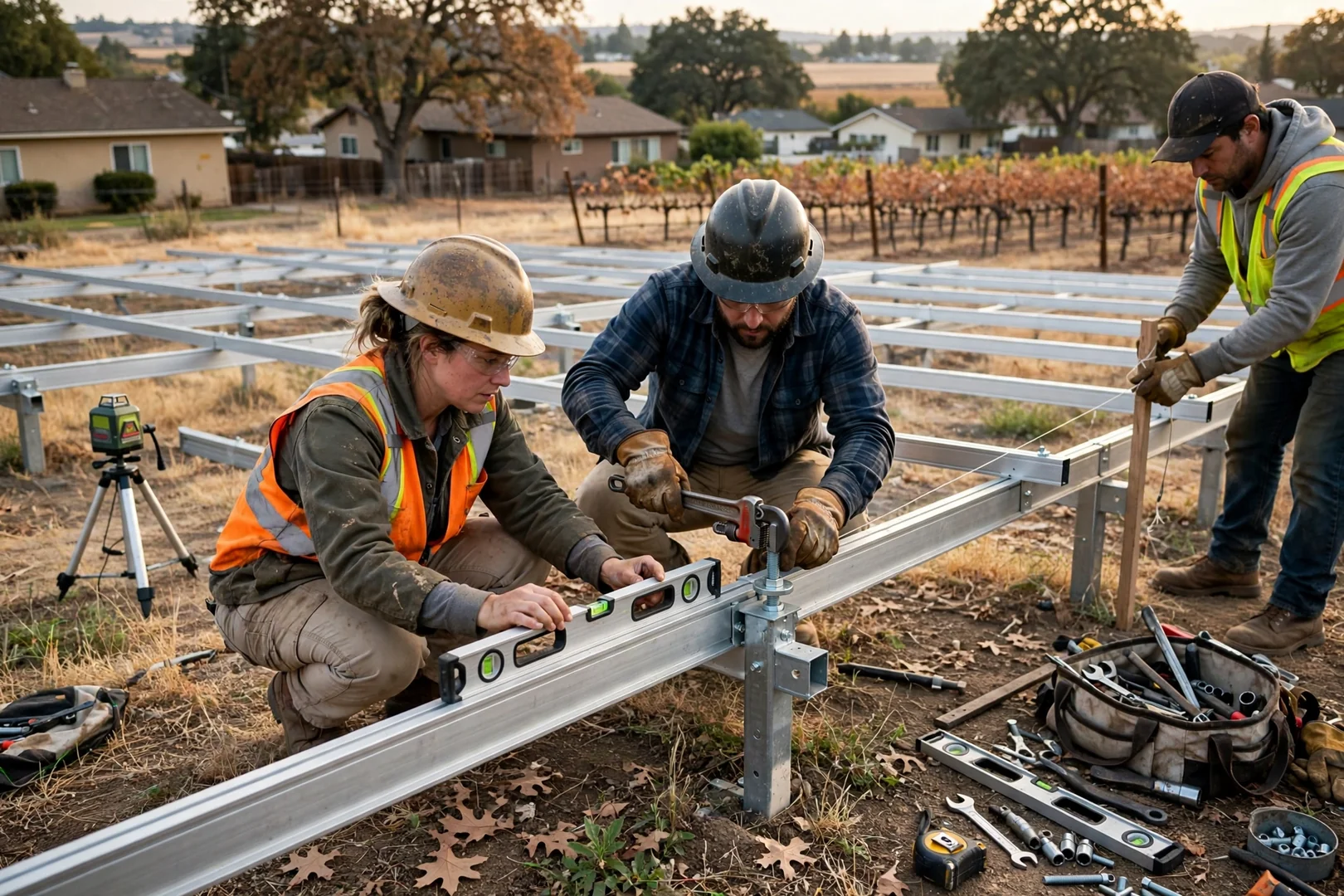
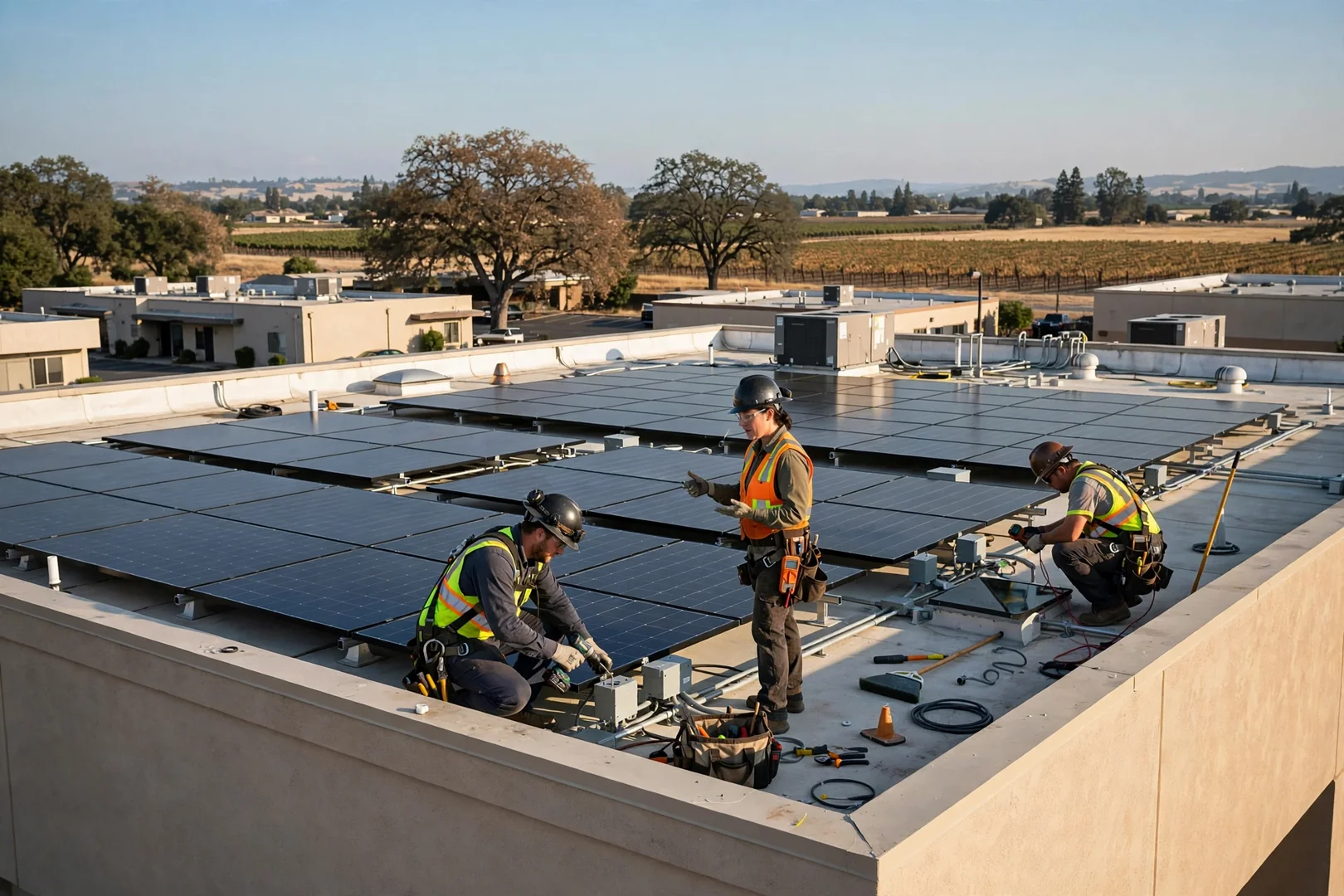
Across Lodi this year, replacement work has ranged from single-module swaps on older residential strings to full array refreshes on vineyard outbuildings and commercial rooftops. Tile roofs in established neighborhoods call for careful lifting and reflashing, while composition shingle homes usually need penetration resealing and fresh rail hardware. Ground mounts near open fields tend to show pier movement in clay soils after wet winters, so we re-level racking before setting new modules. Older arrays in tree-shaded yards often reveal hot spots and delaminated backsheets where filtered light and pollen buildup accelerated wear. Every job starts with monitoring data and a written estimate, then closes with torque checks, production verification, and a walkthrough. Same care on a two-panel repair as a rooftop rebuild.
// Why Lodi Neighbors Call Us //
Questions about swapping out aging or damaged modules come up often, so we gathered the ones we hear most from local property owners in 2026. Each answer reflects how replacements actually go here.
Replacement makes sense when individual modules show delamination, cracked cells, backsheet failure, or persistent underperformance that diagnostics trace to the panel itself rather than the inverter or wiring. We run per-string voltage checks and thermal imaging first, since a single failing bypass diode or a loose MC4 connector can mimic a dead module. If the fault is upstream, a repair is the cheaper fix.
Partial replacement is often possible when the new modules fall within your existing string’s voltage and current specifications. Mismatched wattage or open-circuit voltage can drag down output across the whole string, so we compare the replacement module datasheet against your inverter’s MPPT window before ordering. When no compatible match exists for an older array, we walk you through both options in the written estimate.
A typical replacement day starts with a full system shutdown at the AC disconnect and DC isolation, followed by removing the affected modules from the racking, inspecting the roof penetrations and flashing underneath, and mounting the new panels with re-torqued clamps. We then bring the array back online, confirm production through the monitoring portal, and finish with a walkthrough. Old modules leave with us for recycling.
Clear driveway access for the ladder and material staging, unlock any gates leading to the roof access point or the inverter, and move patio furniture or vehicles from beneath the array section being replaced. If you have monitoring app credentials handy, that helps us compare pre- and post-replacement production data. Pets are usually happier indoors while the crew works.
Cost depends on how many modules are being swapped, the wattage and brand you choose, roof pitch and access difficulty, whether racking or flashing needs rework, and any required permitting or utility notification. Homes near orchards and open fields around Lodi sometimes need extra cleaning or racking adjustments because of dust loading and wind exposure, which we note during the site visit. Every quote we hand over in 2026 is itemized in writing before work begins.
Free Solar Panel Replacement Estimates
Ready to talk through aging modules, cloudy backsheets, or panels that stopped pulling their weight after a few hot valley summers? Our crew visits your property, checks string voltage and inverter compatibility, then puts everything in a free written estimate you can review at your own pace. There is no obligation attached. Neighbors across Lodi often compare replacement options against repair before deciding, and we walk through both paths honestly, including panel wattage upgrades, racking condition, and how your 2026 production numbers should look once the new array is producing. Scheduling moves quickly, especially in the milder weeks between summer heat and winter fog when roof work goes smoothly. Call or email us, tell us what your system has been doing lately, and we will set a site visit that fits your week. Reserve your replacement assessment today.